Blog

  • Planning a Self Drive Tour in Rwanda

    We are missionaries from the states working in Rwanda. We have been to various national parks in Rwanda; Akagera National park, Volcanoes National park, Lake Kivu, and Nyungwe National Park, taking independent trips several times in the last 3 years using a self drive car in Rwanda. We have had good days that we have had good sightings of wildlife including the mountain gorillas of PNV, Buffalos, antelopes, hyenas many birds and many more.

    Rwanda has some of the most magnificent landscapes which are unique and the country has good roads with many tourism attractions like National parks including Volcanoes which is known for the endangered mountain gorillas. Rwanda self drive is an excellent option for large families, solo travellers, couples, not only is it more affordable, but it also offers the most excellent services.

    When preparing for a holiday, it is essential to book in advance and confirm in time with Rwanda self drive, last minute rental reservations are not advisable.

    At Rwanda car rental allows you to be more flexible with your travel itinerary where you can stop and enjoy Rwandan hidden attractions and beauty. They also organize self-drive itineraries. They will book your accommodation for you on request, and usually you will have a choice as to what type of accommodation you would like. This is a good option if you don’t have the time to research your itinerary yourself. It’s also a good idea to book your accommodation in advance especially during the months of pick season

    When we learned that we had a group of 13 Bible University students planning to visit us, we decided that we would check into taking a guided self drive, but thought the cost might be prohibitive, since they were on a limited budget. When reading reviews on the internet, we came across Mbaziira the guide.

    He sounded wonderful, and after phoning him, he informed us that he was willing to work with the price for the group so that it would indeed be affordable. Not only did he work out an affordable price & an extra safari guide for our large group, but he was also very personable & down to earth, & witty!

    Our group so much enjoyed having him for their guide! Mbaziira made our Safari that we will always remember! Besides the thrill of seeing the animals, the young people learned so much more about the animals & their habits. We are thankful that we were able to have Mbaziira for our Safari in Akagera national park. I highly recommend Rwanda self drive for any one organizing a self drive tour or a guided tour. They are informed and they know what they do.

    Driving tips for self drive Rwanda

    • Do not pick up strangers.
    • Do not let your car get too low on fuel/gas. This will help you not to get stark on the road.
    • In case you get lost call our office or go to your nearest petrol station, police station or any business for assistance.
    • It is important to pay special attention to speed limits, road signs and road markings.
    • It is an offense in Rwanda for the driver of a vehicle to use any communication device while driving.
    • Cope up with the rules of the road in Rwanda. Remember that Rwandese drive on the right hand side of the road.
    • Keep your luggage where you can see it and never unattended.
    • Keep your car doors locked at all time and windows up most especially when parking the car. Lock valuable items in the boot.
    • Stop at designated viewing or picnic spots only.
    • At night, park in well lit areas, hotel parking for security purposes.
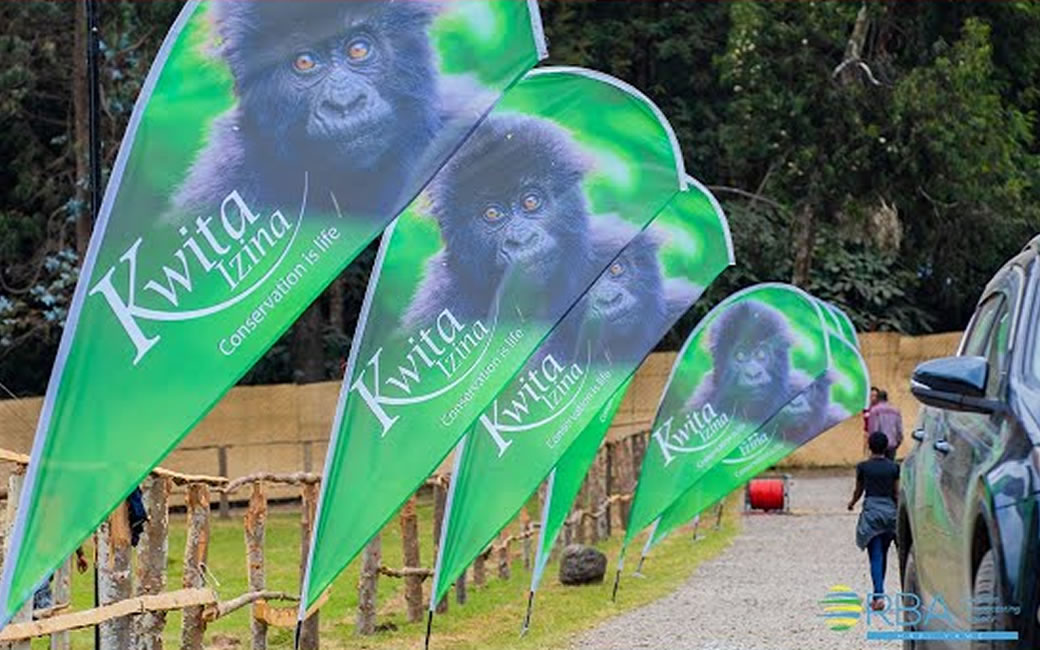
  • Sir David Attenborough Invited for Kwita Izina

    Sir David Attenborough Invited for Kwita Izina

    If only we would collectively rise to mankind’s greatest challenge to restore what we unjustly borrowed in the name of civilization, the world would become a better place.”

    That was Sir David Attenborough’s key message as he chatted with a small group of distinguished guests at the Rwanda High Commission in London on July26.

    The veteran broadcaster and conservationist was invited by Her Excellency Yamina Karitanyi, the High Commissioner of Rwanda to the UK (in cooperation with the Rwanda Development Board), to visit the High Commission and name a newborn gorilla as part of this year’s Kwita Izina gorilla naming ceremony. While there, Sir David met with select guests to discuss conservation in Rwanda, his famous encounter with mountain gorillas  in the country in 1978, and the special place these remarkable animals hold in the hearts of people all around the world.

    “There is no feeling that surpasses coming face to face with a great ape; their resemblance to mankind is uncanny,” said Attenborough. “As you gaze at them, careful not to make eye contact, you become small in their presence and begin to appreciate the evolutionary process of life.”

    Changing Fortunes

    With only around 880 individuals remaining in the wild, mountain gorillas are critically endangered and face many threats to their survival. However, thanks to the tireless efforts of communities, rangers, conservationists and government agencies, their future looks much brighter today than when Attenborough first encountered them in 1978.

    “When the film crew arrived in Rwanda in 1978, we were met by a distraught Dian Fossey who was grieving over the death of one of the gorillas – a little male who had been killed by poachers. At that time mountain gorillas really were on the brink of extinction, and as I left she made me promise to do what I could to help,” said Attenborough.

    Upon his return to the UK, Attenborough arranged a meeting with Fauna & Flora International (FFI), a charity that he still supports as vice-president. From that meeting the Mountain Gorilla Project was born, which survives to this day as the International Gorilla Conservation Programme (IGCP) – a collaboration between FFI and WWF.

    And it has been working. Thanks to a deliberate policy of democratising conservation that supports and empowers communities to take ownership, as well as the hard work of governments and conservation partners across its range, the mountain gorilla population is now on the rise.

    Conservation without borders

    This spirit of collaboration has proven absolutely crucial to the mountain gorilla’s continued survival in the face of severe threats. “Mountain gorilla conservation has always been challenged by the fact that these animals range across the borders of three states – Rwanda, Uganda and the Democratic Republic of Congo (DRC),” said IGCP Director, Anna Behm Masozera.

    “At times it has meant political and even personal risk to ensure that conservation and protection activities were well coordinated across international borders, even when this was neither a very popular nor well understood concept.

    “But thanks to the incredible determination of all involved, governments from the three states have recently signed a landmark treaty that will pave the way for coordinated conservation without borders, turning a challenge into an incredible opportunity for wildlife and people,” she added.

    Giving Back

    So are mountain gorillas worth all this effort?
    According to the Rwanda Development Board, tourism is now Rwanda’s largest source of foreign income which generated US$318 million in 2015. One estimate suggests that mountain gorilla activities are the leading leisure component, which accounts for around 60% of this total revenue.

    But the Chief Tourism Officer at the Rwanda Development Board, Belise Kariza, believes there is much more to it than a dollar value – as exemplified by Kwita Izina, a special ceremony held for the gorillas each year.

    “Naming ceremonies for newly born babies have been part of Rwandan culture and tradition for centuries. Kwita Izina connects to these traditions to create a strong bond between the country’s people and the gorillas,” she says.

    “The names given to the gorillas also play a significant role in the ongoing monitoring of individuals, as part of the remarkable efforts by the Government of Rwanda through the Rwanda Development Board – in collaboration with various conservation partners and local communities – to protect the mountain gorillas and their habitat,” she added.

    “On September 2, we are delighted to say that we will be naming 22 baby gorillas as we celebrate the 12th annual Kwita Izina. Alongside these celebrations, we will also be holding a ‘conversation on conservation’ forum designed to help us forge a great future for wildlife together with conservation partners all over the world.”

    Attenborough hopes that the mountain gorilla success story can be replicated elsewhere. “All around the world, species and ecosystems are in decline. If the mountain gorilla has taught us anything, it is that the conservation of our natural world is vital not just for wild species in and of themselves, but for mankind as a whole.”