Blog

  • A Day Trip to See Rwanda Gorillas

    Rwanda is a very beautiful Africa country with a lot to see and discover but just a day in Rwanda is enough for one to enjoy the best country attractions and adventures. Are you a first time visitor or you got less time?.If you’re planning unforgettable Rwanda trip outside the city, a 1 Day Rwanda gorilla safari is that you must not miss in Rwanda especially for saving and limited time travelers.

    This trip simplifies life for many travelers with fixed travel schedules and budget because, you experience the most loved wildlife encounter and also maintain your work or travel schedules.Less is spent on this trip and travelers save much on accommodation, transport and the entire holiday than those who go for long Rwanda holidays. The amazing thing is that it converts many from city noise and hassles to the wild and the breathtaking jungle tiled in bamboo trees and green vegetation. The one day Rwanda trip to Volcanoes national park and the finest gorilla tracking destination in Africa fulfills all human imaginations of Africa gorilla safaris as well as offering impressive jungle experience.

    Volcanoes national park location is for history because it qualifies as the nearest mountain gorilla tracking destination for everyone visiting Africa for gorilla tracking holidays. Travelers have breakfast very early before leaving there lodge of residence in Kigali and also enjoy a morning cup of coffee before briefing in company of Rwanda cultural dancers. After the trek you can have lunch in any of the gorilla lodge around the park or drive back to Kigali city and have it done in complete comfort and relaxation. No entrance fees are paid and the trip permits one to explore Kigali city as well because the Rwanda gorilla safaris end a little bit early than expected. Please be aware those Rwanda gorillas permits are on high demand year round so book your gorilla pass as early as possible in order not to be disappointed. However, lucky travelers book last minute Rwanda gorilla tracking tours and still find gorilla permits available though some ones luck can never be yours. The one day trip does not need one to book accommodation at the park on the day for the trek since you will leave immediately.

    All you need is only, the valid passport, Rwanda gorilla permit, tracking gears, some little cash that is you want to tip or donate to any local community project around the park.Some times its tricky during the high season so would highly recommend travelers to book their gorilla permits, transport and other essential through a trusted and genuine Rwanda travel agent.

    Those with more time in the country can engage in other park tour activities like golden monkey trek, hiking, birding, community visits, Dian Fossey visit, forest walk, hiking ,or visit other Rwanda tourist attractions near the gorilla park like Lake Kivu, Nyungwe Forest, Akagera national park among others.In Africa its only Rwanda with perfect tour destinations and spots to unwind, rejuvenate and also enjoy the fresh atmosphere.

  • Planning Family Safaris in Rwanda

    Like any other travel destination, Rwanda the land of great views welcomes all kinds of visitors at any time of the year to explore its natural beauty. Despite it being the smallest in the region, the country is bordered by Uganda, Democratic Republic of Congo, Tanzania and Burundi which make it act as the most convenient connecting hub to most amazing regional tourist attractions. Bwindi forest, Mgahinga national park, Virunga conservation area, active volcanoes – Nyirangongo and Nyinamulagira plus rewarding mountains ,Muhavura, Bisoke & Karisimbi are one of the most selected attractions which make travellers to Rwanda cross borders for more adventure fun. Among the many new and creative tour options that are available for families and group tours to Rwanda include the 5-9 day gorilla and wildlife safari Uganda & Rwanda and a 5 day gorilla tracking tour Rwanda & Congo. These Rwanda gorilla safaris turn into life time opportunities for multi generations even those yet to come.

    Opportunities don’t seem to end when travel expats modify tour itinerary programs to suit different tastes of traveller to Rwanda for holidays.

    Rwanda family and group tours are always down to earth in costs and affordable by many despite the pricy gorilla permits at US$1500. Lodging facilities also fit in many traveller budgets because 2-3 people can share a room and cost unlike the single occupancy. Tourists get worried when it comes to connecting between different destinations in foreign country but the solution is only to travel in a group or family so that you can share the same vehicle and also spend less on both car hire and fuel. Besides for those interested in visiting other tourist attractions in the region still safari vehicles are allowed to cross from one country to the other hence adventuring on minimal budget.No family holiday can end in Rwanda without taking a wild forest walk to Volcanoes national park to meet the endangered mountain gorillas. Also Learning about the Rwanda culture is a must for many travellers because no guest can fail to steer at a live cultural dance performance before the Gorilla trek or even after. Those who get to the park late at the time for Gorilla briefing can still catch up with the most Rwanda cultural tour experience after the trek that is they are stay around the country for an extra day.

    Guests are allowed to be part of all the different cultural activities, the cultural dance, the warrior performance, king and queen performance, marriage celebration performances etc a thing which make them love the foreign culture even more. It’s a great experience to be treated as a royal in the foreign land. Wonderful afternoon forest walks also count a lot in most Rwanda group and family holidays providing unforgettable moment together as one.Imagine being one of them on your Rwanda Gorilla tracking tour. Don’t feel sad if you planning your Rwanda safari holiday alone but you can still join others on a group tour or convince your friends to join you and explore Rwanda’s main attraction together. I understand some times travel dates can be a problem to match with friends but try and set distant dates for everyone to plan. Though Gorilla permit prices are bound to be higher by 2020 I believe family and group tours will be the best tour option for every travellers Rwanda.

  • On the Trails of Rwanda’s Nyungwe Forest

    On the Trails of Rwanda’s Nyungwe Forest

    Rwanda’s Nyungwe Forest National Park may not get as much attention as the Volcanoes National Park – home to the rare mountain-dwelling gorillas – but it’s no less impressive.

    Spanning more than 1,000 sq kilometres, wandering through Nyungwe Forest is ideal for travellers seeking a classic wilderness experience or those who merely want to clear their heads of clouded thoughts.

    Located in southwestern Rwanda at the border with Burundi, Nyungwe is said to be the largest and best preserved montane rainforest in the whole of East and Central Africa.

    The forest protects more than 1,000 plant species, at least 120 butterfly species, 310 bird species, 13 primate species and 38 reptile species – according to the Rwanda Development Board, the state-run agency in charge of the country’s flora and fauna.

    Attractions in Nyungwe Forest

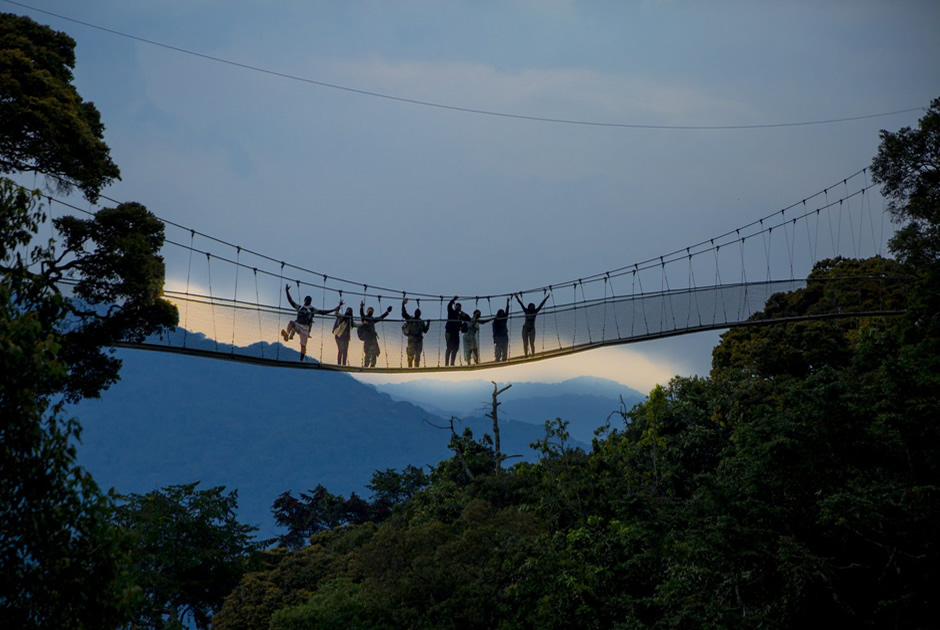
    Nyungwe Forest National Park’s star attraction has always been the chimpanzee, followed closely by the Black & White Colobus Monkey, birdlife, as well as the only canopy walkway in East Africa, which spans 160 metres and rises 70 metres above the forest floor.

    In my case, however, the primary motivator for my recent visit to Nyungwe Forest National Park was simple: to get back to nature and leave all the emotional baggage behind.

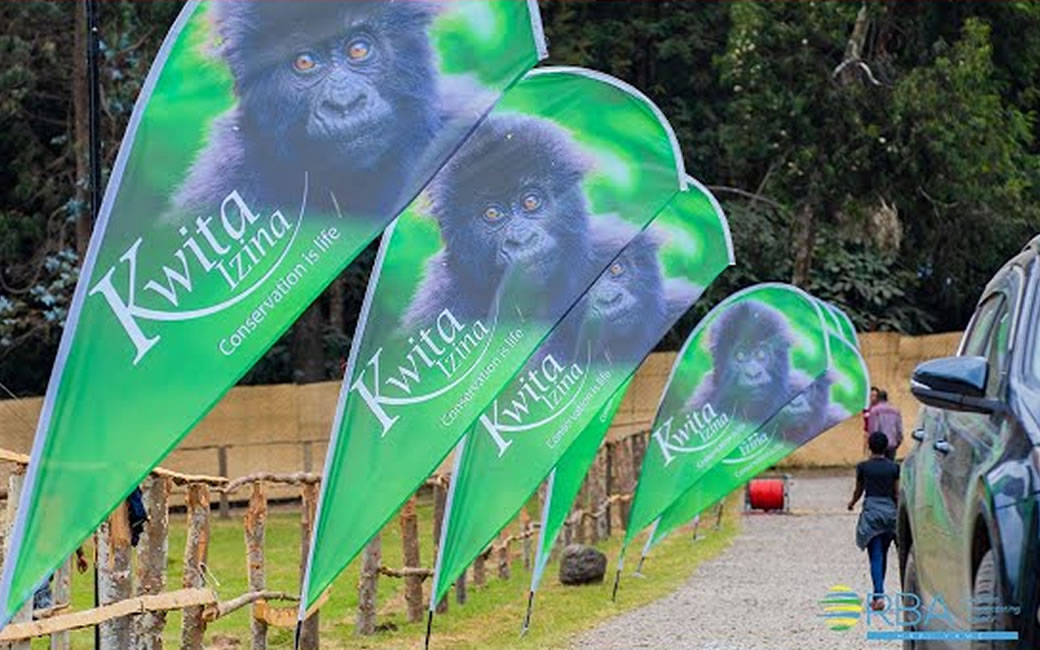
    I was with a group of travel bloggers and journalists from around the world. We travelled to Rwanda on a media familiarisation trip sponsored by the Rwanda Development Board in the run-up to the 2018 installment of Kwita Izina, the country’s annual baby gorilla naming and conservation fete.

    We visited Nyungwe Forest National Park on our third day in the country after checking out Kibuye, Rwanda’s tranquil vacation town that nests on the shores of Lake Kivu, one of Africa’s Great Lakes.

    After our car pulled into the Gisakura Station on the western edge of the park, we were warmly welcomed by one of the park’s guides who, after a few hellos, gave us some commentary on Nyungwe.

    The park is named Nyungwe because, many years ago, locals believed that leopards were roaming the forest. Nyungwe, we were told, means “the place of leopards” in Kinyarwanda.

    The Rwandan government gazetted the forest in 2005 because of its outstanding natural value as it contributes significantly to the survival of both people and wildlife in the country.

    “This forest is the source of 70 per cent of Rwanda’s water,” our guide said as we set off for our first hike in the forest.

    Isumo Waterfall Trail

    We pursued the path that leads to the Isumo Waterfall, located about five kilometres from One&Only Nyungwe House, the newest luxury lodge in the park.

    Our mid-morning hike seemed quite comfortable at the beginning, and everyone in our group of 21 was enjoying it – or so it seemed. But it became a little unnerving for some of my colleagues as we progressed deeper into the forest.

    The snaking Isumo Waterfall Trail, as it turned out, is the most strenuous hike in Nyungwe as it takes you through some steep ravines interspersed with slippery stretches.

    But if you are under 70 years old, have two legs and a set of lungs and also exercise (even if it’s once in a while), this is not the kind of hike that should intimidate you.

    Yet it did intimidate many of my colleagues. We were about two kilometres into the excursion when two of them began to complain of knee pain and decided to do an unprecedented about-turn.

    The rest of us carried on, enjoying the forest’s cool breeze, the sound of streams, the breathtaking views of trees – many of them endangered species – blanketing every vista, as well as a bit of camaraderie.

    There were also a couple of birds and Black & White Colobus Monkeys that we saw in the forest. Snakes such as vipers are also common here, our guide said, but thank God we never saw any slithering towards or past us. They loomed large in my mind, nevertheless!

    As we clocked more kilometres on the trail, the air became thicker — perfused with smells of foliage — and most of my colleagues could no longer hide their increasing exhaustion.

    “How long is it before we reach the waterfall?” they inquired at some point, almost in unison. Our guide averted another possible wave of about-turns when he informed us that we had only about 200 metres to the finish line. There wasn’t so much left to endure.

    A few minutes later, there it was in front of us – nature at its most rudimentary. We couldn’t have imagined the beauty of the view. The less eulogised Isumo watery wonder quickly became the centre point of our trek, and we all agreed that the strenuous hike was worth it, after all.

    We now focused on readjusting to our new surroundings and congratulated ourselves by depleting our packed lunch as we enjoyed the thunderous sound of the waterfalls.

    For me, the tiredness slipped away instantaneously (well, almost) and my heart rate took the much-needed dip. I felt rejuvenated.

    Canopy walkway 

    The following morning, we went for the canopy walkway trek on the eastern part of the park, and it turned out to be an easier ramble for all of us.

    In fact, Nyungwe Forest’s canopy walkway took us only about one-and-a-half hours to complete, offering us nothing more than the spectacular views of the park’s landscapes.

    A couple of hours later, we were back in our 4WDs for our return journey to Kigali. And as the lush green landscapes of Nyungwe Forest slowly blended into villages and then towns, we all felt reinvigorated and ready to re-enter the helter-skelter urban life and the air-conditioned world of Kigali Serena Hotel.

  • Why conservation in Rwanda’s Volcanoes National Park is so crucial

    There are currently about 900 mountain gorillas in total around the world. These critically endangered species can only be found in the Virunga chain of volcanic mountains that straddle Rwanda, Uganda and the Democratic Republic of Congo.

    Around half of them live in Rwanda, which is why conservation in this area is so crucial. They reside in the Virunga Mountains and are normally found very high up in the mountains, between 8,000 to 13,000 feet.

    Unfortunately, these mountain gorillas have been struggling to survive for years. Conservation resulted in a 20 per cent increase in their population in the early 2000s, but they are still seriously under threat. Sadly, they are hunted by poachers and killed or taken from their natural habitat to be sold.

    Poverty in the areas where they live forces poachers to hunt the gorillas to earn money. Poachers will also sell their heads, feet and hands on the black market. Occasionally, they get caught in snares or traps made to injure and capture other animals.

    The mountain gorillas have endured poachers, periods of extreme violence and destruction of their habitat. Trees are cut down to create charcoal for the locals. Since humans have inhabited the local area, the gorillas have had to go further up the mountains to get away, facing more difficult terrain. Despite all this, they are still fighting to survive and conservationists are giving them a chance to thrive.

    There are 19 recognised gorilla families in the Rwandan part of the Volcanoes National Park, and around 380 individual gorillas. These gorillas were made famous by the 1988 film ‘Gorillas In The Mist’ which told the story of Dian Fossey. One of the key ways to help these gorillas is to educate the local people and show them that the gorillas are an important part of the local economy, through tourism rather than poaching.

    Greg Bakunzi of Amahoro Tours has been working hard to convert poachers into conservationists to help protect these amazing creatures. He first helped the poachers by encouraging them to raise animals such as goats to earn them a different kind of living.

    The poachers then earned a living through other means, such as selling art around the park and working as drivers for Amahoro Tours. These poachers just need to see the light and realise there are other options available to them. There are now two drivers working for Amahoro Tours who used to be poachers but are now passionate about the conservation of the gorillas.

    ‘Amahoro’ means ‘peace’ which is very relevant to the gorillas, they should be left to live in peace and be free from persecution. Amahoro Tours offers trips to see the famous mountain gorillas. Visitor numbers are restricted, you can’t get too close and there is no flash photography to prevent disturbing the gorillas.

  • Driving Basics in Rwanda

    Planning to drive yourself through the land of a thousand hills? Driving in Rwanda can be one of the most scenic and rewarding experiences in East Africa, but it helps to know the essentials before you get behind the wheel.

    This comprehensive guide covers everything you need to know about driving basics in Rwanda  from road rules and conditions to practical safety tips. Whether you’re planning a self-driving Rwanda into the Volcanoes National Park, Nyungwe Forest, or Lake Kivu, understanding these fundamentals will help you drive confidently and enjoy a smooth journey in 2026–2027.

    Driving Side and Basic Traffic Rules in Rwanda

    One of the most important driving basics in Rwanda is that vehicles drive on the right-hand side of the road. This makes it relatively easy for most international visitors from Europe, America, and many other countries to adapt quickly.

    Speed limits are clearly indicated: 40 km/h in cities and towns, 60 km/h on most rural roads, and a maximum of 80 km/h on major highways. Inside national parks, the speed limit is strictly 40 km/h to protect wildlife. Wearing seatbelts is mandatory for all passengers, and using a mobile phone while driving is prohibited.

    Traffic police are quite active, particularly on the main routes out of Kigali. Always carry your original driver’s license, international driving permit (recommended), vehicle documents, and insurance papers. Understanding and respecting these basic traffic rules is essential for a hassle-free self-drive experience in Rwanda.

    Road Conditions Across Rwanda – What to Expect

    Rwanda boasts one of the best road infrastructures in East Africa, but conditions vary significantly. The main paved roads connecting Kigali to Musanze (Volcanoes National Park), Huye, Rusizi, and the Eastern Province are generally in good condition.

    However, once you leave the primary highways, especially when heading to Nyungwe Forest or remote parts of Akagera, you will encounter murram (dirt) roads that can become dusty in the dry season and slippery or muddy during the rainy seasons (March–May and October–November).

    Mountain roads often have steep inclines, sharp bends, and narrow sections. Driving at night outside major towns is not recommended due to limited lighting and unexpected obstacles. Being aware of Rwanda’s varying road conditions helps you plan realistic daily distances and choose the right vehicle for your self-drive adventure.

    Required Documents and Legal Requirements for Driving in Rwanda

    Before hitting the road, make sure you have all the necessary documents for driving in Rwanda. You will need a valid national driver’s license accompanied by an International Driving Permit (IDP). This is particularly important if your license is not in English or French.

    You must also carry the vehicle’s registration papers, proof of insurance, and your passport at all times. Rental companies usually provide these documents, but it’s your responsibility to keep them safe.

    Rwanda maintains a very strict zero-tolerance policy on drink-driving. The legal blood alcohol limit is extremely low, and penalties are severe. It is safest to avoid alcohol entirely if you plan to drive. Knowing these legal requirements is a crucial part of the driving basics in Rwanda every foreign driver should understand.

    Safety Tips for Driving in Rwanda

    Safety is the most important aspect of driving basics in Rwanda. Rwanda’s roads can be narrow and winding, especially in the northern and western mountainous regions. Always drive defensively, maintain a safe distance from other vehicles, and be extremely cautious around motorcycles (motos), pedestrians, and cyclists.

    Avoid driving after dark outside Kigali and other major towns. Use your indicators correctly and be patient when overtaking on hilly or curved roads. In cities, traffic can become congested during rush hours, so stay calm and patient.

    If you’re unsure about the route, use reliable offline navigation apps. For a safe and enjoyable self-drive trip, always prioritize caution over speed. These safety tips will help you navigate Rwanda’s roads with confidence.

    Navigating National Parks and Rural Roads in Rwanda

    Driving inside Rwanda’s national parks requires special attention. Speed limits are reduced to 40 km/h, and off-road driving is strictly forbidden to protect the fragile environment and wildlife.

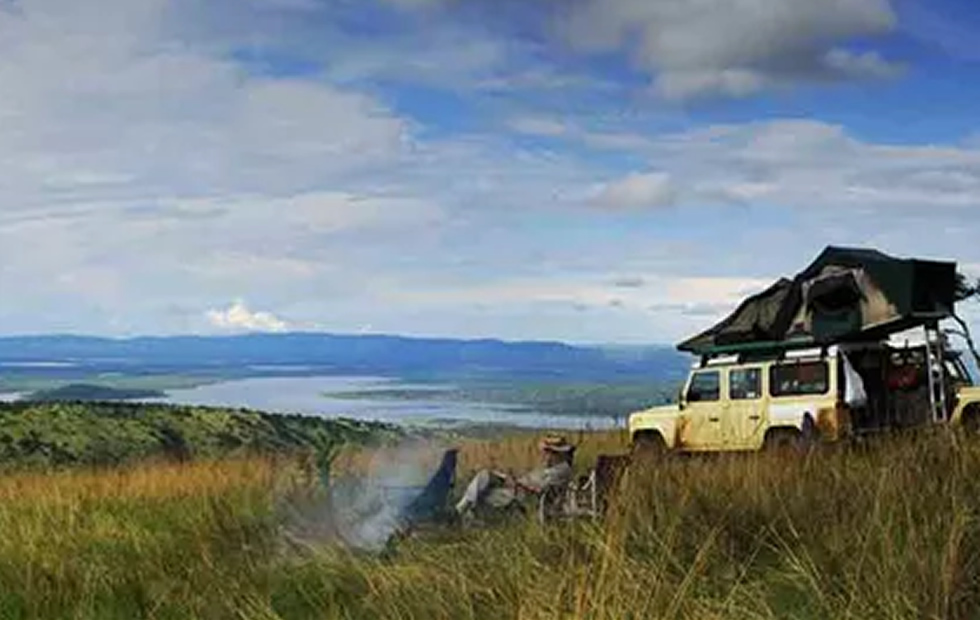
    In Volcanoes National Park, Nyungwe Forest, and Akagera National Park, stick to designated tracks and follow instructions from park rangers. Some roads can be steep and slippery, especially during the rainy season, making a proper 4×4 vehicle highly recommended.

    In rural areas, expect to share the road with people, animals, and bicycles. A gentle use of the horn is common to alert others. Planning your routes carefully and allowing extra time when driving through national parks and rural areas is one of the smartest driving basics in Rwanda you can follow.

    Fuel, Maintenance, and Roadside Assistance

    Fuel stations are plentiful in Kigali and major towns, but they become fewer as you head into more remote areas. Always fill your tank before traveling to national parks or distant regions.

    Choose a reputable rental company that provides well-maintained vehicles. Most serious companies offer 24/7 roadside assistance — make sure you save their emergency contact number.

    It’s wise to carry basic items such as a spare tire, basic toolkit, and jump leads. Understanding fuel availability and having reliable roadside support is an essential part of safe driving basics in Rwanda.

    Cultural Etiquette and Interacting with Other Road Users

    Rwandans are generally courteous on the road. A friendly wave or smile when giving way is appreciated and helps create positive interactions. Be patient with slower vehicles and motorcycles — honking should be used gently as a warning rather than in frustration.

    When asking for directions, a simple greeting such as “Muraho” (hello) or “Bonjour” goes a long way. If you make a small mistake, a calm apology is usually enough to resolve any situation.

    Respecting local driving culture and showing politeness will make your journey much more pleasant. Good etiquette is an important, often overlooked part of the driving basics in Rwanda.

    Conclusion: Drive Safely and Enjoy the Beauty of Rwanda

    Mastering the driving basics in Rwanda will allow you to explore this beautiful country with confidence and freedom. From the smooth highways around Kigali to the scenic roads leading to the volcanoes and rainforests, Rwanda offers some of the most rewarding self-drive experiences in East Africa.

    With proper preparation, respect for the rules, and a cautious approach, driving in Rwanda can be both safe and deeply enjoyable.

    For reliable and well-maintained 4×4 vehicles perfect for self-drive trips across Rwanda, 4×4 Rwanda Car Rentals stands out as one of the best car rental companies in Rwanda with the best rates, offering quality service and excellent support for international travelers.
  • How to Avoid Car Rental Nightmares in Rwanda

    How to Avoid Car Rental Nightmares in Rwanda

    Currently car hire in Rwanda has become popular trend of travel in the land of a thousand hills. When it comes to the ground transportation fraternity, organized travel can easily be attained if you decide to work with car rental agencies. This is normally used by independent travelers on a self drive in Uganda. Remarkably, renting a car in Uganda has been so useful to visitors traveling to Uganda since they are convenient, safe, and reliable to take the travelers at any place they are practically or still be unfamiliar with.

    On the same note However, self driving in Rwanda can be disastrous if you are never careful. This can be validated by you hitting the internet and see how some customers complain about them due to the high costs they land in after using the car rentals as some car rental companies hire cars to customers without insurance coverage and pretend to have. Not well services and there are also overwhelmingly hidden fees that are not explained to the customer before hire.

    So we are here to enlighten you on how to avoid Rwanda car rental nightmare:

    Know what car suits your travel needs.

    Continuously, most people make a mistake of under estimating the need or finding out what car best suits the needs of their travels and just go for expensive car rental yet there are those cheap cars in Rwanda purposely for a specific need. Say adventure, business car rental or corporate car hire. Example if you are going for a Rwanda gorilla safari, ask yourself which car suits the tour, read about the terrain of the Virunga volcanoes and know in detail which car maneuvers the terrains. Vehicle with high ground clearance would perfectly fit your needs.. The most recommended cars for safaris are the Toyota land cruisers, Toyota RAV4s and the Nissan patrols reason behind is these are sport utility vehicles with 4WD with reasonably high ground clearance vehicles. On the other hand if you are going for a city tour around Kigali city and the neighboring towns of Musanze, Huye or Karongi with about two persons,best recommended use a compact car.

    Book a Car Rental in Advance

    Like the old saying goes, The early bird catches the worm and this works well in Rwanda car rental business due to the high demand and growing car rental demand and yes, in the high tourist seasons. If you start searching and booking your car rental earlier than the date you intend to travel, you have the time to look for a best car rental as you have all the time to search and also bargain for better offers getting the best car rental deals. Theres always room for you to control the car rental deals in that you tell the car rental company whatever you want in the car rental service that is the size of the car, specification and the prices

    Ask for the disclosure of all the prices included in the car rental package

    In every business on the internet, there are always attractive prices displayed on the websites and there are always additional costs behind the enticing price on the internet. So you have to play your part and tell the car rental company in Rwanda to stipulate each and every expense you may incur while using the car rental services in Rwanda. Some of the hidden costs are fuel refill fees, early return fees, limited mileage, road taxes, and airport parking fees. So make sure all these are included and explained to you in the car rental clause and the car rental agreements so that you can easily budget for your car rental in Rwanda.

    Ask if the car rental in Rwanda is comprehensively insured

    It’s a mandate from the government of Rwanda that every car rental in Rwanda must be insured against third party, comprehensive insurance is recommended and yes never hire a car in Rwanda without comprehensive insurance because if you land in trouble and in cases of damages, all the costs caused will be apportioned onto you. Very much recommended make sure that has third party insurance and comprehensive insurance where by the car is covered against all cost it may cause while traveling.

    Considerably following the above advice well, you are more likely to avoid the nightmares that may be attached to Rwanda Car Rental and definitely enjoy your self drive car rental in Rwanda.

  • Get Up Close and Personal with Rwanda Gorillas

    Have you ever wondered how the king Kong looks like in its physicality or would you want to see the king Kong eye to eye?  To most of us when they talk about gorillas what clicks in our mind is that gorillas are monsters and beasts that can endanger human life and most of us would never want to meet a gorilla at any one time. All I can say my friends this is a myth that needs to be erased from our minds.

    This can only be done by you coming to Rwanda and take a gorilla tour where you can learn a lot about gorillas with a visual experience. Gorillas are really very awesome animals to visit.  These primates almost behave like humans that is the way they feed their young ones, co-exist with one another and their shelter are really amazing. So if you want to feel the thrill of seeing a gorilla come to Rwanda’s Volcanoes Park in the Virunga region and visit one of the habituated family of gorillas.

    While taking up a gorilla tour in Rwanda, there are guidelines undertaken  tracking these primates for the reasons of conservation and preservation; the gorillas are supposed to be tracked by a person who is above 15 years, one must have a gorilla permit which is bought from Rwanda development board or from a tour operator/company, you must be able bodied since this is a vigorous and challenging activity where one has to use a lot of energy to pass through the forests and walk up and down the ranges of Virunga to find these gorillas.

    So one taking up the tour has to put the latter in mind so that he doesn’t get any hardships or disappointments while on a gorilla safari. There are lots of interesting things one encounters while gorilla tracking like watching gorillas feed their young ones, playing and chasing themselves around, you can take pictures of gorillas but this has to be done without flashes of the camera and you will also enjoy a narrative and captivating story about the gorillas and the national park from the gorilla patron.

    You can also opt to visit the Diana Fossey tomb and the research centre. This zoologist fought tooth and nail to save these gorillas in the 1940s. Had not been her, there would be no opportunity of gorilla trekking in Rwanda because they were in danger from the local people as they were being killed for settlement by the local people. As you are in the world of gorillas that is the Virunga, you can also visit the golden monkeys at the basement of volcanoes national park. There are also rare primates that are hard to find so you can have some optical nutrition by seeing these special monkeys.

    Getting close to gorillas can make you wonder and believe the theory of mankind evolution from the apes because these creatures almost behave like humans.

  • Planning a Self Drive Tour in Rwanda

    We are missionaries from the states working in Rwanda. We have been to various national parks in Rwanda; Akagera National park, Volcanoes National park, Lake Kivu, and Nyungwe National Park, taking independent trips several times in the last 3 years using a self drive car in Rwanda. We have had good days that we have had good sightings of wildlife including the mountain gorillas of PNV, Buffalos, antelopes, hyenas many birds and many more.

    Rwanda has some of the most magnificent landscapes which are unique and the country has good roads with many tourism attractions like National parks including Volcanoes which is known for the endangered mountain gorillas. Rwanda self drive is an excellent option for large families, solo travellers, couples, not only is it more affordable, but it also offers the most excellent services.

    When preparing for a holiday, it is essential to book in advance and confirm in time with Rwanda self drive, last minute rental reservations are not advisable.

    At Rwanda car rental allows you to be more flexible with your travel itinerary where you can stop and enjoy Rwandan hidden attractions and beauty. They also organize self-drive itineraries. They will book your accommodation for you on request, and usually you will have a choice as to what type of accommodation you would like. This is a good option if you don’t have the time to research your itinerary yourself. It’s also a good idea to book your accommodation in advance especially during the months of pick season

    When we learned that we had a group of 13 Bible University students planning to visit us, we decided that we would check into taking a guided self drive, but thought the cost might be prohibitive, since they were on a limited budget. When reading reviews on the internet, we came across Mbaziira the guide.

    He sounded wonderful, and after phoning him, he informed us that he was willing to work with the price for the group so that it would indeed be affordable. Not only did he work out an affordable price & an extra safari guide for our large group, but he was also very personable & down to earth, & witty!

    Our group so much enjoyed having him for their guide! Mbaziira made our Safari that we will always remember! Besides the thrill of seeing the animals, the young people learned so much more about the animals & their habits. We are thankful that we were able to have Mbaziira for our Safari in Akagera national park. I highly recommend Rwanda self drive for any one organizing a self drive tour or a guided tour. They are informed and they know what they do.

    Driving tips for self drive Rwanda

    • Do not pick up strangers.
    • Do not let your car get too low on fuel/gas. This will help you not to get stark on the road.
    • In case you get lost call our office or go to your nearest petrol station, police station or any business for assistance.
    • It is important to pay special attention to speed limits, road signs and road markings.
    • It is an offense in Rwanda for the driver of a vehicle to use any communication device while driving.
    • Cope up with the rules of the road in Rwanda. Remember that Rwandese drive on the right hand side of the road.
    • Keep your luggage where you can see it and never unattended.
    • Keep your car doors locked at all time and windows up most especially when parking the car. Lock valuable items in the boot.
    • Stop at designated viewing or picnic spots only.
    • At night, park in well lit areas, hotel parking for security purposes.
  • Sir David Attenborough Invited for Kwita Izina

    Sir David Attenborough Invited for Kwita Izina

    If only we would collectively rise to mankind’s greatest challenge to restore what we unjustly borrowed in the name of civilization, the world would become a better place.”

    That was Sir David Attenborough’s key message as he chatted with a small group of distinguished guests at the Rwanda High Commission in London on July26.

    The veteran broadcaster and conservationist was invited by Her Excellency Yamina Karitanyi, the High Commissioner of Rwanda to the UK (in cooperation with the Rwanda Development Board), to visit the High Commission and name a newborn gorilla as part of this year’s Kwita Izina gorilla naming ceremony. While there, Sir David met with select guests to discuss conservation in Rwanda, his famous encounter with mountain gorillas  in the country in 1978, and the special place these remarkable animals hold in the hearts of people all around the world.

    “There is no feeling that surpasses coming face to face with a great ape; their resemblance to mankind is uncanny,” said Attenborough. “As you gaze at them, careful not to make eye contact, you become small in their presence and begin to appreciate the evolutionary process of life.”

    Changing Fortunes

    With only around 880 individuals remaining in the wild, mountain gorillas are critically endangered and face many threats to their survival. However, thanks to the tireless efforts of communities, rangers, conservationists and government agencies, their future looks much brighter today than when Attenborough first encountered them in 1978.

    “When the film crew arrived in Rwanda in 1978, we were met by a distraught Dian Fossey who was grieving over the death of one of the gorillas – a little male who had been killed by poachers. At that time mountain gorillas really were on the brink of extinction, and as I left she made me promise to do what I could to help,” said Attenborough.

    Upon his return to the UK, Attenborough arranged a meeting with Fauna & Flora International (FFI), a charity that he still supports as vice-president. From that meeting the Mountain Gorilla Project was born, which survives to this day as the International Gorilla Conservation Programme (IGCP) – a collaboration between FFI and WWF.

    And it has been working. Thanks to a deliberate policy of democratising conservation that supports and empowers communities to take ownership, as well as the hard work of governments and conservation partners across its range, the mountain gorilla population is now on the rise.

    Conservation without borders

    This spirit of collaboration has proven absolutely crucial to the mountain gorilla’s continued survival in the face of severe threats. “Mountain gorilla conservation has always been challenged by the fact that these animals range across the borders of three states – Rwanda, Uganda and the Democratic Republic of Congo (DRC),” said IGCP Director, Anna Behm Masozera.

    “At times it has meant political and even personal risk to ensure that conservation and protection activities were well coordinated across international borders, even when this was neither a very popular nor well understood concept.

    “But thanks to the incredible determination of all involved, governments from the three states have recently signed a landmark treaty that will pave the way for coordinated conservation without borders, turning a challenge into an incredible opportunity for wildlife and people,” she added.

    Giving Back

    So are mountain gorillas worth all this effort?
    According to the Rwanda Development Board, tourism is now Rwanda’s largest source of foreign income which generated US$318 million in 2015. One estimate suggests that mountain gorilla activities are the leading leisure component, which accounts for around 60% of this total revenue.

    But the Chief Tourism Officer at the Rwanda Development Board, Belise Kariza, believes there is much more to it than a dollar value – as exemplified by Kwita Izina, a special ceremony held for the gorillas each year.

    “Naming ceremonies for newly born babies have been part of Rwandan culture and tradition for centuries. Kwita Izina connects to these traditions to create a strong bond between the country’s people and the gorillas,” she says.

    “The names given to the gorillas also play a significant role in the ongoing monitoring of individuals, as part of the remarkable efforts by the Government of Rwanda through the Rwanda Development Board – in collaboration with various conservation partners and local communities – to protect the mountain gorillas and their habitat,” she added.

    “On September 2, we are delighted to say that we will be naming 22 baby gorillas as we celebrate the 12th annual Kwita Izina. Alongside these celebrations, we will also be holding a ‘conversation on conservation’ forum designed to help us forge a great future for wildlife together with conservation partners all over the world.”

    Attenborough hopes that the mountain gorilla success story can be replicated elsewhere. “All around the world, species and ecosystems are in decline. If the mountain gorilla has taught us anything, it is that the conservation of our natural world is vital not just for wild species in and of themselves, but for mankind as a whole.”