Author: admin

  • 10 Reasons to Go Gorilla Trekking in Rwanda

    10 Reasons to Go Gorilla Trekking in Rwanda

    Rwanda is one of the growing tourist destinations that attracts travelers interested in adventure travel.  Among other tourist activities, Rwanda is famous for gorilla trekking which takes place in Volcanoes National Park.

    Gorilla trekking is the top tourist activities in Rwanda. Most visitors travel to the Volcanoes National Park to see the mountain gorillas in the Virunga ranges and there are about twelve gorilla families that have been habituated for tourist visits. The current cost of Rwanda gorilla permit is US$1500 and it is advisable to book your pass at least six months before the actual date of your visit.

    Its on record that many of Rwanda tourists go for gorilla trekking safaris and in this article, let us rationalize why many people yarn to trek gorillas in Rwanda.

    • Short distance from Kigali Airport or city. The park is the most accessible of all gorilla parks in the country. The distance from Kigali to the Volcanoes National Park is a 2 hours drive. If compared to gorilla treks in Uganda that involve 8 hours drive from Entebbe to Bwindi Impenetrable National Park and Mgahinga Gorilla National Park in Uganda, this is the easiest destination to access for travelers.
    • Quick gorilla trek – Rwanda offers one day gorilla safari to save time. Tourists on tight schedule and low budget find it wise to go gorilla trekking in Rwanda.  You need to fly in Kigali – spend the night and be picked from the hotel in Kigali at around 5am – transfer to Volcanoes National park- report at the briefing point by 7:30am. After 30 minutes briefing, the group of trekkers is always escorted by armed rangers to meet gorillas in their natural habitat.
    • 10 Habituated gorilla families – May gorilla permits are available on daily basis since each gorilla family is visited by a maximum one hour and thereafter, return to the park headquarters – drive back to Kigali for departures to be awarded certificates of attendance – depart.
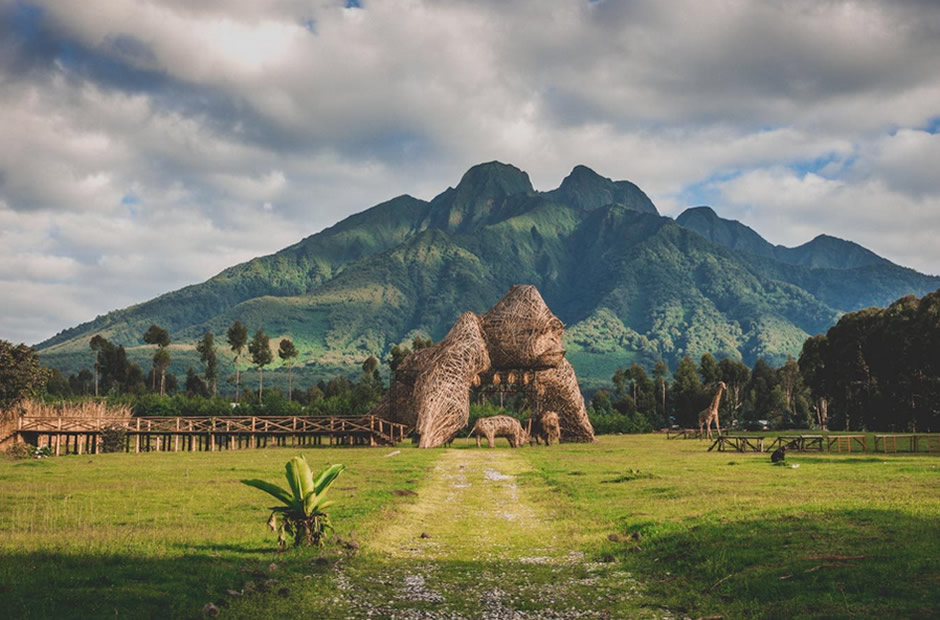
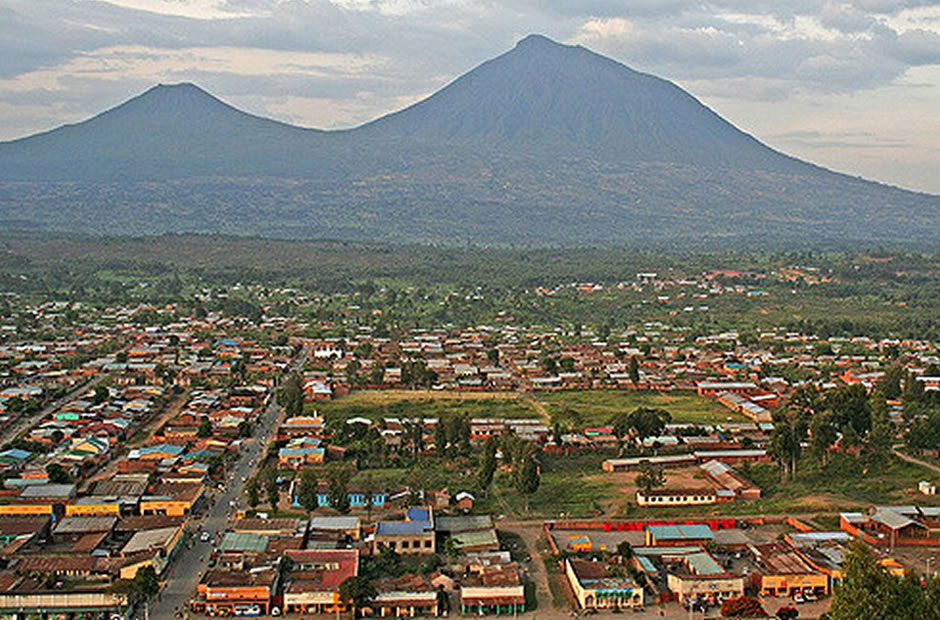
    • Virunga range – Volcanoes National Park offers a clear platform of viewing Virunga mountains like Bisoke, Karisimbi, Muhabura, Sabinyo and Gahinga. Once you visit Volcanoes National Park, you will trek gorillas amidst Virunga volcanoes.
    • Other attractions in Volcanoes National Park – alongside gorilla trekking, tourists can go golden monkey trekking, birding, visit the twin lakes and cultural tour among others. You can enjoy a variety of attraction to obtain maximum satisfaction.
    • The surrounding accommodation – Volcanoes National Park is surrounded by many luxuries, mid-range and budget Hotels and camps among others. You can decide to stay in any of the types of accommodation basing on your interest ad budget.
    • Simple trek –Volcanoes National Park offers simple trek because of few habituated gorilla families (10 groups) and rangers can easily detect where gorillas are basing on their previous location.
    • Professional tour operators – Many of Rwanda tours employs qualified tour operators and on ground. They know how? When? where? And why? In Rwanda, the tour operator will answer all your questions and organize your safari effectively.
    • Security – all tourists destinations are guarded by the Rwanda army, tourism police, Rwanda Development game rangers among others.
    • Size of Volcanoes National Park – It covers 160 km2 (62 sq mi) of rain forest and encompasses five of the eight volcanoes in the Virunga Mountains, namely Karisimbi, Bisoke, Muhabura, Gahinga and Sabyinyo.
  • As Gorilla Tourism Grows, one Rwandan Town is Reaping the Benefits

    As Gorilla Tourism Grows, one Rwandan Town is Reaping the Benefits

    Musanze district is the hub of Rwanda’s tourism industry and a source of many adventures. It has a long list of adventure activities on offer. However, when the spotlight is put on adventure, most people will immediately think of the iconic mountain gorillas. And this would be right since the primates have positioned themselves as Rwanda’s flagship tourist attraction.

    But there are other must-see attractions in Musanze, such as the Musanze Caves, as well as other animals that reside in the Volcanoes National Park. There is also the historic Buhanga Eco-Park, which was a sacred forest where Rwandan kings performed initiation ceremonies.

    Over the past few years, Musanze district has been striving to live to its image as a tourism hub, with different economic sectors registering varying degrees of success and this has also come with improvement of people’s lives.

    The new district mayor, Jean Damascene Habyarima, says Musanze has the potential to grow economically and together with the district staff and residents, they are going to continue working to move the district forward, which will vindicate the its claim as the heart of the tourism industry in Rwanda.

    In terms of its tourism potential, Musanze district is home to the unique and world famous mountain gorillas which attract nearly 30,000 tourists every year from all over the world. Musanze’s capital, Ruhengeri, is one of the largest cities in Rwanda and serves as a hub for tourists.

    According to Greg Bakunzi, the managing director of Musanze-based Amahoro Tours, there have been tremendous improvement in infrastructure in Ruhengeri town and many investors in the hospitality industry have constructed first class facilities like hotels to cash in on the growing tourism activities in the region.

    “When we started, there were only four top hotels in Ruhengeri. This number has significantly increased over the last few years, and we now have brands like Silver Buck Hotel, Gorillas Volcanoes Hotel in Kinigi, Snow Hotel, Red Rocks Hostel Rwanda, Lake Ruhondo Lodge and Tented Camp and many more offering both luxurious and back-packing accommodation to tourists in Ruhengeri.

    Bakunzi adds that the 2016 opening of the Dian Fossey Museum, named the Karisoke Exhibit, has also been a major development in the tourism industry in Musanze since the museum is deeply connected with the conservation of the mountain gorillas. The museum is the brainchild of the Karisoke Research Center, which is run by the Dian Fossey Gorilla Fund International (DFGFI), an international gorilla conservation organisation.

    “Many tourists who come here now know the efforts it took to preserve the endangered primates, and the museum also serves as resource center for the local community to learn about the importance of conservation, particularly around the Virunga massif that straddles Rwanda, Uganda and Democratic Republic of Congo (DRC).

    Bakunzi adds Musanze’s position as a tourism center was further boosted with the construction of Kinigi Community Commercial Center (KCCC) whose main mission is to help the local people develop interest in commercial enterprises, particularly the rural communities living in the areas bordering the Volcanoes National Park.

    Since it opened its doors in 2013 in Butorwa 1 village, KCCC has been a home to 12 local cooperative members mostly selling handcrafts and clothes to tourists who visit the parks, and providing the opportunity for the locals to be gainfully employed. The center is brainchild of a consortium of organizations seeking to conserve the environment around the parks.

    Bakunzi observes that over the years, Musanze’s position as the country’s tourism hub has seen development of several modern buildings and rehabilitation of the old ones.

    “The construction of the Musanze Modern Market, Rwanda Social Security Board, and the rehabilitation of the Musanze Bus Park all has given Ruhengeri town a new metropolis look, and the town is now regarded as second to Kigali in terms of infrastructural development,” says the tour operator.

    Jeanne Uwamahoro, a resident of Musanze town, says Musanze is now paralleling Kigali when it comes to cleanliness, adding that it’s refreshing to observe that its streets are now daily swept and plants planted along the streets to spruce up the image of the town as a green town.

    “It’s also noteworthy to observe that for every new road constructed, there’s installation of street lights along the roads, and the town is now becoming a secure place to walk even during the night,” says Uwamahoro.

    Her view is supported by Bakunzi who says, for example, the newly tarmacked eight-kilometer road leading to Buhanga Eco-Park is installed with street lights.

    “The roads leading to the Volcanoes National Park has been paved, and the park has been fenced to prevent human-wildlife conflicts that was rampant before, and this has created peaceful co-existence between humans and animals,” says Bakunzi.

  • A Day Trip to See Rwanda Gorillas

    Rwanda is a very beautiful Africa country with a lot to see and discover but just a day in Rwanda is enough for one to enjoy the best country attractions and adventures. Are you a first time visitor or you got less time?.If you’re planning unforgettable Rwanda trip outside the city, a 1 Day Rwanda gorilla safari is that you must not miss in Rwanda especially for saving and limited time travelers.

    This trip simplifies life for many travelers with fixed travel schedules and budget because, you experience the most loved wildlife encounter and also maintain your work or travel schedules.Less is spent on this trip and travelers save much on accommodation, transport and the entire holiday than those who go for long Rwanda holidays. The amazing thing is that it converts many from city noise and hassles to the wild and the breathtaking jungle tiled in bamboo trees and green vegetation. The one day Rwanda trip to Volcanoes national park and the finest gorilla tracking destination in Africa fulfills all human imaginations of Africa gorilla safaris as well as offering impressive jungle experience.

    Volcanoes national park location is for history because it qualifies as the nearest mountain gorilla tracking destination for everyone visiting Africa for gorilla tracking holidays. Travelers have breakfast very early before leaving there lodge of residence in Kigali and also enjoy a morning cup of coffee before briefing in company of Rwanda cultural dancers. After the trek you can have lunch in any of the gorilla lodge around the park or drive back to Kigali city and have it done in complete comfort and relaxation. No entrance fees are paid and the trip permits one to explore Kigali city as well because the Rwanda gorilla safaris end a little bit early than expected. Please be aware those Rwanda gorillas permits are on high demand year round so book your gorilla pass as early as possible in order not to be disappointed. However, lucky travelers book last minute Rwanda gorilla tracking tours and still find gorilla permits available though some ones luck can never be yours. The one day trip does not need one to book accommodation at the park on the day for the trek since you will leave immediately.

    All you need is only, the valid passport, Rwanda gorilla permit, tracking gears, some little cash that is you want to tip or donate to any local community project around the park.Some times its tricky during the high season so would highly recommend travelers to book their gorilla permits, transport and other essential through a trusted and genuine Rwanda travel agent.

    Those with more time in the country can engage in other park tour activities like golden monkey trek, hiking, birding, community visits, Dian Fossey visit, forest walk, hiking ,or visit other Rwanda tourist attractions near the gorilla park like Lake Kivu, Nyungwe Forest, Akagera national park among others.In Africa its only Rwanda with perfect tour destinations and spots to unwind, rejuvenate and also enjoy the fresh atmosphere.

  • Planning Family Safaris in Rwanda

    Like any other travel destination, Rwanda the land of great views welcomes all kinds of visitors at any time of the year to explore its natural beauty. Despite it being the smallest in the region, the country is bordered by Uganda, Democratic Republic of Congo, Tanzania and Burundi which make it act as the most convenient connecting hub to most amazing regional tourist attractions. Bwindi forest, Mgahinga national park, Virunga conservation area, active volcanoes – Nyirangongo and Nyinamulagira plus rewarding mountains ,Muhavura, Bisoke & Karisimbi are one of the most selected attractions which make travellers to Rwanda cross borders for more adventure fun. Among the many new and creative tour options that are available for families and group tours to Rwanda include the 5-9 day gorilla and wildlife safari Uganda & Rwanda and a 5 day gorilla tracking tour Rwanda & Congo. These Rwanda gorilla safaris turn into life time opportunities for multi generations even those yet to come.

    Opportunities don’t seem to end when travel expats modify tour itinerary programs to suit different tastes of traveller to Rwanda for holidays.

    Rwanda family and group tours are always down to earth in costs and affordable by many despite the pricy gorilla permits at US$1500. Lodging facilities also fit in many traveller budgets because 2-3 people can share a room and cost unlike the single occupancy. Tourists get worried when it comes to connecting between different destinations in foreign country but the solution is only to travel in a group or family so that you can share the same vehicle and also spend less on both car hire and fuel. Besides for those interested in visiting other tourist attractions in the region still safari vehicles are allowed to cross from one country to the other hence adventuring on minimal budget.No family holiday can end in Rwanda without taking a wild forest walk to Volcanoes national park to meet the endangered mountain gorillas. Also Learning about the Rwanda culture is a must for many travellers because no guest can fail to steer at a live cultural dance performance before the Gorilla trek or even after. Those who get to the park late at the time for Gorilla briefing can still catch up with the most Rwanda cultural tour experience after the trek that is they are stay around the country for an extra day.

    Guests are allowed to be part of all the different cultural activities, the cultural dance, the warrior performance, king and queen performance, marriage celebration performances etc a thing which make them love the foreign culture even more. It’s a great experience to be treated as a royal in the foreign land. Wonderful afternoon forest walks also count a lot in most Rwanda group and family holidays providing unforgettable moment together as one.Imagine being one of them on your Rwanda Gorilla tracking tour. Don’t feel sad if you planning your Rwanda safari holiday alone but you can still join others on a group tour or convince your friends to join you and explore Rwanda’s main attraction together. I understand some times travel dates can be a problem to match with friends but try and set distant dates for everyone to plan. Though Gorilla permit prices are bound to be higher by 2020 I believe family and group tours will be the best tour option for every travellers Rwanda.

  • On the Trails of Rwanda’s Nyungwe Forest

    On the Trails of Rwanda’s Nyungwe Forest

    Rwanda’s Nyungwe Forest National Park may not get as much attention as the Volcanoes National Park – home to the rare mountain-dwelling gorillas – but it’s no less impressive.

    Spanning more than 1,000 sq kilometres, wandering through Nyungwe Forest is ideal for travellers seeking a classic wilderness experience or those who merely want to clear their heads of clouded thoughts.

    Located in southwestern Rwanda at the border with Burundi, Nyungwe is said to be the largest and best preserved montane rainforest in the whole of East and Central Africa.

    The forest protects more than 1,000 plant species, at least 120 butterfly species, 310 bird species, 13 primate species and 38 reptile species – according to the Rwanda Development Board, the state-run agency in charge of the country’s flora and fauna.

    Attractions in Nyungwe Forest

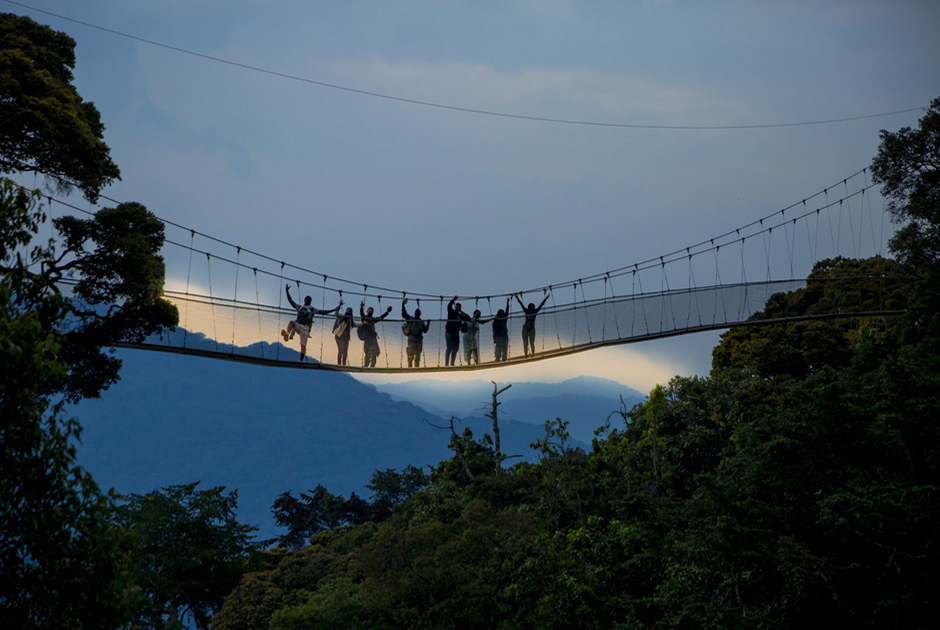
    Nyungwe Forest National Park’s star attraction has always been the chimpanzee, followed closely by the Black & White Colobus Monkey, birdlife, as well as the only canopy walkway in East Africa, which spans 160 metres and rises 70 metres above the forest floor.

    In my case, however, the primary motivator for my recent visit to Nyungwe Forest National Park was simple: to get back to nature and leave all the emotional baggage behind.

    I was with a group of travel bloggers and journalists from around the world. We travelled to Rwanda on a media familiarisation trip sponsored by the Rwanda Development Board in the run-up to the 2018 installment of Kwita Izina, the country’s annual baby gorilla naming and conservation fete.

    We visited Nyungwe Forest National Park on our third day in the country after checking out Kibuye, Rwanda’s tranquil vacation town that nests on the shores of Lake Kivu, one of Africa’s Great Lakes.

    After our car pulled into the Gisakura Station on the western edge of the park, we were warmly welcomed by one of the park’s guides who, after a few hellos, gave us some commentary on Nyungwe.

    The park is named Nyungwe because, many years ago, locals believed that leopards were roaming the forest. Nyungwe, we were told, means “the place of leopards” in Kinyarwanda.

    The Rwandan government gazetted the forest in 2005 because of its outstanding natural value as it contributes significantly to the survival of both people and wildlife in the country.

    “This forest is the source of 70 per cent of Rwanda’s water,” our guide said as we set off for our first hike in the forest.

    Isumo Waterfall Trail

    We pursued the path that leads to the Isumo Waterfall, located about five kilometres from One&Only Nyungwe House, the newest luxury lodge in the park.

    Our mid-morning hike seemed quite comfortable at the beginning, and everyone in our group of 21 was enjoying it – or so it seemed. But it became a little unnerving for some of my colleagues as we progressed deeper into the forest.

    The snaking Isumo Waterfall Trail, as it turned out, is the most strenuous hike in Nyungwe as it takes you through some steep ravines interspersed with slippery stretches.

    But if you are under 70 years old, have two legs and a set of lungs and also exercise (even if it’s once in a while), this is not the kind of hike that should intimidate you.

    Yet it did intimidate many of my colleagues. We were about two kilometres into the excursion when two of them began to complain of knee pain and decided to do an unprecedented about-turn.

    The rest of us carried on, enjoying the forest’s cool breeze, the sound of streams, the breathtaking views of trees – many of them endangered species – blanketing every vista, as well as a bit of camaraderie.

    There were also a couple of birds and Black & White Colobus Monkeys that we saw in the forest. Snakes such as vipers are also common here, our guide said, but thank God we never saw any slithering towards or past us. They loomed large in my mind, nevertheless!

    As we clocked more kilometres on the trail, the air became thicker — perfused with smells of foliage — and most of my colleagues could no longer hide their increasing exhaustion.

    “How long is it before we reach the waterfall?” they inquired at some point, almost in unison. Our guide averted another possible wave of about-turns when he informed us that we had only about 200 metres to the finish line. There wasn’t so much left to endure.

    A few minutes later, there it was in front of us – nature at its most rudimentary. We couldn’t have imagined the beauty of the view. The less eulogised Isumo watery wonder quickly became the centre point of our trek, and we all agreed that the strenuous hike was worth it, after all.

    We now focused on readjusting to our new surroundings and congratulated ourselves by depleting our packed lunch as we enjoyed the thunderous sound of the waterfalls.

    For me, the tiredness slipped away instantaneously (well, almost) and my heart rate took the much-needed dip. I felt rejuvenated.

    Canopy walkway 

    The following morning, we went for the canopy walkway trek on the eastern part of the park, and it turned out to be an easier ramble for all of us.

    In fact, Nyungwe Forest’s canopy walkway took us only about one-and-a-half hours to complete, offering us nothing more than the spectacular views of the park’s landscapes.

    A couple of hours later, we were back in our 4WDs for our return journey to Kigali. And as the lush green landscapes of Nyungwe Forest slowly blended into villages and then towns, we all felt reinvigorated and ready to re-enter the helter-skelter urban life and the air-conditioned world of Kigali Serena Hotel.

  • Why conservation in Rwanda’s Volcanoes National Park is so crucial

    There are currently about 900 mountain gorillas in total around the world. These critically endangered species can only be found in the Virunga chain of volcanic mountains that straddle Rwanda, Uganda and the Democratic Republic of Congo.

    Around half of them live in Rwanda, which is why conservation in this area is so crucial. They reside in the Virunga Mountains and are normally found very high up in the mountains, between 8,000 to 13,000 feet.

    Unfortunately, these mountain gorillas have been struggling to survive for years. Conservation resulted in a 20 per cent increase in their population in the early 2000s, but they are still seriously under threat. Sadly, they are hunted by poachers and killed or taken from their natural habitat to be sold.

    Poverty in the areas where they live forces poachers to hunt the gorillas to earn money. Poachers will also sell their heads, feet and hands on the black market. Occasionally, they get caught in snares or traps made to injure and capture other animals.

    The mountain gorillas have endured poachers, periods of extreme violence and destruction of their habitat. Trees are cut down to create charcoal for the locals. Since humans have inhabited the local area, the gorillas have had to go further up the mountains to get away, facing more difficult terrain. Despite all this, they are still fighting to survive and conservationists are giving them a chance to thrive.

    There are 19 recognised gorilla families in the Rwandan part of the Volcanoes National Park, and around 380 individual gorillas. These gorillas were made famous by the 1988 film ‘Gorillas In The Mist’ which told the story of Dian Fossey. One of the key ways to help these gorillas is to educate the local people and show them that the gorillas are an important part of the local economy, through tourism rather than poaching.

    Greg Bakunzi of Amahoro Tours has been working hard to convert poachers into conservationists to help protect these amazing creatures. He first helped the poachers by encouraging them to raise animals such as goats to earn them a different kind of living.

    The poachers then earned a living through other means, such as selling art around the park and working as drivers for Amahoro Tours. These poachers just need to see the light and realise there are other options available to them. There are now two drivers working for Amahoro Tours who used to be poachers but are now passionate about the conservation of the gorillas.

    ‘Amahoro’ means ‘peace’ which is very relevant to the gorillas, they should be left to live in peace and be free from persecution. Amahoro Tours offers trips to see the famous mountain gorillas. Visitor numbers are restricted, you can’t get too close and there is no flash photography to prevent disturbing the gorillas.

  • Driving Basics in Rwanda

    Planning to drive yourself through the land of a thousand hills? Driving in Rwanda can be one of the most scenic and rewarding experiences in East Africa, but it helps to know the essentials before you get behind the wheel.

    This comprehensive guide covers everything you need to know about driving basics in Rwanda  from road rules and conditions to practical safety tips. Whether you’re planning a self-driving Rwanda into the Volcanoes National Park, Nyungwe Forest, or Lake Kivu, understanding these fundamentals will help you drive confidently and enjoy a smooth journey in 2026–2027.

    Driving Side and Basic Traffic Rules in Rwanda

    One of the most important driving basics in Rwanda is that vehicles drive on the right-hand side of the road. This makes it relatively easy for most international visitors from Europe, America, and many other countries to adapt quickly.

    Speed limits are clearly indicated: 40 km/h in cities and towns, 60 km/h on most rural roads, and a maximum of 80 km/h on major highways. Inside national parks, the speed limit is strictly 40 km/h to protect wildlife. Wearing seatbelts is mandatory for all passengers, and using a mobile phone while driving is prohibited.

    Traffic police are quite active, particularly on the main routes out of Kigali. Always carry your original driver’s license, international driving permit (recommended), vehicle documents, and insurance papers. Understanding and respecting these basic traffic rules is essential for a hassle-free self-drive experience in Rwanda.

    Road Conditions Across Rwanda – What to Expect

    Rwanda boasts one of the best road infrastructures in East Africa, but conditions vary significantly. The main paved roads connecting Kigali to Musanze (Volcanoes National Park), Huye, Rusizi, and the Eastern Province are generally in good condition.

    However, once you leave the primary highways, especially when heading to Nyungwe Forest or remote parts of Akagera, you will encounter murram (dirt) roads that can become dusty in the dry season and slippery or muddy during the rainy seasons (March–May and October–November).

    Mountain roads often have steep inclines, sharp bends, and narrow sections. Driving at night outside major towns is not recommended due to limited lighting and unexpected obstacles. Being aware of Rwanda’s varying road conditions helps you plan realistic daily distances and choose the right vehicle for your self-drive adventure.

    Required Documents and Legal Requirements for Driving in Rwanda

    Before hitting the road, make sure you have all the necessary documents for driving in Rwanda. You will need a valid national driver’s license accompanied by an International Driving Permit (IDP). This is particularly important if your license is not in English or French.

    You must also carry the vehicle’s registration papers, proof of insurance, and your passport at all times. Rental companies usually provide these documents, but it’s your responsibility to keep them safe.

    Rwanda maintains a very strict zero-tolerance policy on drink-driving. The legal blood alcohol limit is extremely low, and penalties are severe. It is safest to avoid alcohol entirely if you plan to drive. Knowing these legal requirements is a crucial part of the driving basics in Rwanda every foreign driver should understand.

    Safety Tips for Driving in Rwanda

    Safety is the most important aspect of driving basics in Rwanda. Rwanda’s roads can be narrow and winding, especially in the northern and western mountainous regions. Always drive defensively, maintain a safe distance from other vehicles, and be extremely cautious around motorcycles (motos), pedestrians, and cyclists.

    Avoid driving after dark outside Kigali and other major towns. Use your indicators correctly and be patient when overtaking on hilly or curved roads. In cities, traffic can become congested during rush hours, so stay calm and patient.

    If you’re unsure about the route, use reliable offline navigation apps. For a safe and enjoyable self-drive trip, always prioritize caution over speed. These safety tips will help you navigate Rwanda’s roads with confidence.

    Navigating National Parks and Rural Roads in Rwanda

    Driving inside Rwanda’s national parks requires special attention. Speed limits are reduced to 40 km/h, and off-road driving is strictly forbidden to protect the fragile environment and wildlife.

    In Volcanoes National Park, Nyungwe Forest, and Akagera National Park, stick to designated tracks and follow instructions from park rangers. Some roads can be steep and slippery, especially during the rainy season, making a proper 4×4 vehicle highly recommended.

    In rural areas, expect to share the road with people, animals, and bicycles. A gentle use of the horn is common to alert others. Planning your routes carefully and allowing extra time when driving through national parks and rural areas is one of the smartest driving basics in Rwanda you can follow.

    Fuel, Maintenance, and Roadside Assistance

    Fuel stations are plentiful in Kigali and major towns, but they become fewer as you head into more remote areas. Always fill your tank before traveling to national parks or distant regions.

    Choose a reputable rental company that provides well-maintained vehicles. Most serious companies offer 24/7 roadside assistance — make sure you save their emergency contact number.

    It’s wise to carry basic items such as a spare tire, basic toolkit, and jump leads. Understanding fuel availability and having reliable roadside support is an essential part of safe driving basics in Rwanda.

    Cultural Etiquette and Interacting with Other Road Users

    Rwandans are generally courteous on the road. A friendly wave or smile when giving way is appreciated and helps create positive interactions. Be patient with slower vehicles and motorcycles — honking should be used gently as a warning rather than in frustration.

    When asking for directions, a simple greeting such as “Muraho” (hello) or “Bonjour” goes a long way. If you make a small mistake, a calm apology is usually enough to resolve any situation.

    Respecting local driving culture and showing politeness will make your journey much more pleasant. Good etiquette is an important, often overlooked part of the driving basics in Rwanda.

    Conclusion: Drive Safely and Enjoy the Beauty of Rwanda

    Mastering the driving basics in Rwanda will allow you to explore this beautiful country with confidence and freedom. From the smooth highways around Kigali to the scenic roads leading to the volcanoes and rainforests, Rwanda offers some of the most rewarding self-drive experiences in East Africa.

    With proper preparation, respect for the rules, and a cautious approach, driving in Rwanda can be both safe and deeply enjoyable.

    For reliable and well-maintained 4×4 vehicles perfect for self-drive trips across Rwanda, 4×4 Rwanda Car Rentals stands out as one of the best car rental companies in Rwanda with the best rates, offering quality service and excellent support for international travelers.
  • How to Avoid Car Rental Nightmares in Rwanda

    How to Avoid Car Rental Nightmares in Rwanda

    Currently car hire in Rwanda has become popular trend of travel in the land of a thousand hills. When it comes to the ground transportation fraternity, organized travel can easily be attained if you decide to work with car rental agencies. This is normally used by independent travelers on a self drive in Uganda. Remarkably, renting a car in Uganda has been so useful to visitors traveling to Uganda since they are convenient, safe, and reliable to take the travelers at any place they are practically or still be unfamiliar with.

    On the same note However, self driving in Rwanda can be disastrous if you are never careful. This can be validated by you hitting the internet and see how some customers complain about them due to the high costs they land in after using the car rentals as some car rental companies hire cars to customers without insurance coverage and pretend to have. Not well services and there are also overwhelmingly hidden fees that are not explained to the customer before hire.

    So we are here to enlighten you on how to avoid Rwanda car rental nightmare:

    Know what car suits your travel needs.

    Continuously, most people make a mistake of under estimating the need or finding out what car best suits the needs of their travels and just go for expensive car rental yet there are those cheap cars in Rwanda purposely for a specific need. Say adventure, business car rental or corporate car hire. Example if you are going for a Rwanda gorilla safari, ask yourself which car suits the tour, read about the terrain of the Virunga volcanoes and know in detail which car maneuvers the terrains. Vehicle with high ground clearance would perfectly fit your needs.. The most recommended cars for safaris are the Toyota land cruisers, Toyota RAV4s and the Nissan patrols reason behind is these are sport utility vehicles with 4WD with reasonably high ground clearance vehicles. On the other hand if you are going for a city tour around Kigali city and the neighboring towns of Musanze, Huye or Karongi with about two persons,best recommended use a compact car.

    Book a Car Rental in Advance

    Like the old saying goes, The early bird catches the worm and this works well in Rwanda car rental business due to the high demand and growing car rental demand and yes, in the high tourist seasons. If you start searching and booking your car rental earlier than the date you intend to travel, you have the time to look for a best car rental as you have all the time to search and also bargain for better offers getting the best car rental deals. Theres always room for you to control the car rental deals in that you tell the car rental company whatever you want in the car rental service that is the size of the car, specification and the prices

    Ask for the disclosure of all the prices included in the car rental package

    In every business on the internet, there are always attractive prices displayed on the websites and there are always additional costs behind the enticing price on the internet. So you have to play your part and tell the car rental company in Rwanda to stipulate each and every expense you may incur while using the car rental services in Rwanda. Some of the hidden costs are fuel refill fees, early return fees, limited mileage, road taxes, and airport parking fees. So make sure all these are included and explained to you in the car rental clause and the car rental agreements so that you can easily budget for your car rental in Rwanda.

    Ask if the car rental in Rwanda is comprehensively insured

    It’s a mandate from the government of Rwanda that every car rental in Rwanda must be insured against third party, comprehensive insurance is recommended and yes never hire a car in Rwanda without comprehensive insurance because if you land in trouble and in cases of damages, all the costs caused will be apportioned onto you. Very much recommended make sure that has third party insurance and comprehensive insurance where by the car is covered against all cost it may cause while traveling.

    Considerably following the above advice well, you are more likely to avoid the nightmares that may be attached to Rwanda Car Rental and definitely enjoy your self drive car rental in Rwanda.

  • Akagera Game Lodge: The Favoured Spot

    Mid the month of february, almost the whole Government of Rwanda was holed up in a lodge in the far off bushes of Kayonza district set in the Eastern Province, attending the third annual government retreat, a time when the government retreats to re-examine and re-strategise as regards the matters of running a state, in the atmost tranquility only the wild can provide.

    This game lodge set off in the southern part of the Akagera game park, two hours drive away from the capital Kigali has grown to prominence ever since its re-opening and now it attracts government retreats and throngs of tourist like it had never before but why is that ?

    Before the 1994 war ravages that left this hotel stripped bare, it provided accommodation and catering for tourists participating in a safari in the savannah-park and it was also the scene for various national conferences and seminars. This was at the time in the late 80’s when Rwandan tourism was at its peak and Akagera National Park was the most visited of the national parks in the country.

    Principle among the attractions of this hotel, was the park that is next to it. The Akagera National Park, Dominated scenically by the labyrinth of swamps and lakes that follow the meandering course of the Akagera River, and believed to be the remotest source of the river.

    Amidst the meandering swamps is home to herds of elephant and buffalo that one might chance on emerging for a drink at the lake, Giraffes and zebras milling in the savannah, and more than a dozen species of antelope which include the chestnut-coated impala, the diminutive oribi, the ungainly tsessebe, the secretive bushbuck as well as the world’s largest antelope, the statuesque Cape eland all inhabitants of the game park.

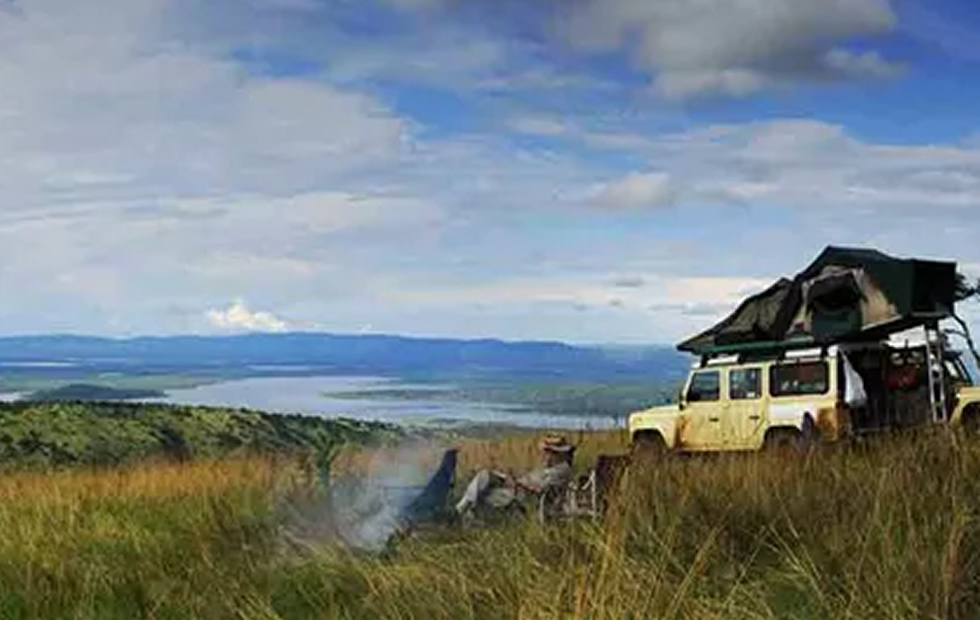
    That is not all as camping around the lake guarantees a sight to withhold, Grunting and snorting pods of hippos basking in the sun in the park’s eight lakes, while outsized crocodiles soak up the sun with their vast jaws menacingly agape.

    Not to be missed also are the unforgettable high dueting of fish eagles, asserting their status as the avian monarchs of Africa’s waterways. Lining the lakes are also some of the continent’s densest concentrations of water birds, which include Storks, Egyptian geese and dazzling white egrets poking through the shore waters for food while the connecting marshes are the haunt of the endangered and exquisite papyrus gonolek, and the bizarre shoebill stork perhaps the most eagerly sought after of all African birds.

    Given all the above exquisite beauty, it was imperative that the hotel be renovated and as it were, a group of Rwandan businessmen bought the Hotel Akagera, renamed it Akagera Game Lodge and approached South African-based GDB Hospitality and Leisure Management Services Ltd. to run it.

    Between last July and December 2003, the new management got rid of the unwelcome guests-the baboons and black-faced vervet monkeys, who stubbornly refused to vacate the 60 rooms, bar, stairway and wherever else they had made themselves at home-and spent $2 million replacing the roofing, reinstalling electrical and other fittings that had been looted and hanging banana leaf collages in the rooms in time for the grand opening of the lodge on December 19.

    Now as it stands, Akagera Game lodge is more of a hotel than a traditional safari lodge, it has fantastic views, with a pool perched on the edge of the savanna, with 60 en-suite rooms the hotel offering adorable views over lake Ihema.

    The wild excavations aside, the hotel offers to its clients digital satelite television, restaurant-bar and banquet hall, a large circular swimming pool and a small swimming pool for children, plus tennis facilities.

    The hotels also has electric power generators in case of power outages, and water reservoirs so the guests rest in the utmost comfort of guaranteed water and power in the deepest of an African savannah bush.

    Whats more, the hotel also gives back to society. The majority of workers originate from the nearby villages and most of the short-term employment opportunities are availed to the villagers around. More to that the hotel also gives away its old furniture to needy people in the neighborhood alongside the various ways in which the hotel interacts and helps out the neigbhouring villages.

    With such a gem in the midst of the savannah, touring and travel agents have not hesitated to include it on top of the-must-see-sights in the country and it has thus been included on the varing itineraries there are to offer. This way the tourist and other guest get to see baboons in the vicinity or the premises of the hotel, totally non-chalant of human activity. After all the hotel is in their territory and they have been the un official guests at the venue for as long as the hotel has existed.

    However it is sadly noted that the authorities after the war, had to hive off about two-thirds of the park’s 1,000 square miles to resettle the returnees from Congo, Tanzania and Uganda who now graze their cattle near — and often inside — the unfenced park and the park is also faced with further encroachments on the park given Rwanda’s population set to increase.

  • Why You Need Extra Insurance on Rwanda Car Rental

    Why You Need Extra Insurance on Rwanda Car Rental

    As tourism flourishes, many travelers opt to rent a car in Rwanda to explore the country at their own pace. While this provides flexibility, it also raises the question of whether one should get extra insurance for their rented vehicle. The answer is an emphatic yes, and here’s why.

    1. Protection from Unforeseen Expenses:

    No matter how cautiously you drive, accidents can happen – even more so in unfamiliar terrains. Basic insurance often covers the vehicle’s damage to a certain extent but might leave you with a hefty deductible. Extra insurance can reduce or eliminate that deductible, ensuring that a minor scrape doesn’t end up costing you significantly.

    1. Compliance with Local Regulations:

    Rwanda may have specific insurance requirements for drivers, especially for foreign tourists. While most rental companies provide a basic cover, this might not suffice when it comes to local regulations. Purchasing additional insurance ensures you remain compliant, avoiding potential legal issues.

    1. Road Conditions:

    While Rwanda has made significant progress in improving its infrastructure, some roads, especially those leading to more remote areas, can be challenging. Potholes, unpaved routes, and occasional flooding can pose risks. Extra coverage ensures that if your car gets damaged on such terrains, you are not burdened financially.

    1. Potential Liability Issues:

    Basic car rental insurance often covers damage to the rental vehicle, but what if you accidentally damage another vehicle or, worse, injure someone? Additional liability insurance can cover these expenses, shielding you from potential lawsuits or out-of-pocket payments.

    1. Peace of Mind:

    When you’re exploring a new country, the last thing you want is constant worry about potential expenses should something go wrong. By opting for extra insurance, you’re purchasing peace of mind, allowing you to enjoy your journey through Rwanda without constant anxiety over potential mishaps.

    1. Limited Personal Coverage:

    Your personal car insurance might offer some level of coverage for rentals, but it might not be comprehensive or applicable internationally. Credit card insurance, another commonly relied upon protection, also has its limitations. Relying solely on these can leave gaps in your coverage, which additional rental insurance can fill.

    1. Risk of Theft:

    While Rwanda is generally safe for tourists, like anywhere else in the world, there’s a risk of car theft or break-ins. Extra insurance can provide coverage against theft, ensuring you’re not held financially responsible if the rental vehicle is stolen.

    1. Invaluable Support Services:

    Many enhanced insurance packages come with additional services like 24/7 roadside assistance. Given that some of Rwanda’s attractions are in remote locations, having guaranteed support in case of breakdowns or other issues is indispensable.

    1. Complex Repair Process:

    If your rental vehicle requires repairs, the process can be complex and drawn-out in a foreign country. Some insurance packages offer the benefit of dealing with these complexities on your behalf, liaising directly with the rental company to ensure the vehicle is repaired or replaced as needed.

    1. Currency and Price Differences:

    In the unfortunate event of an accident without adequate insurance, you’ll need to pay for repairs or damages. Given currency differences and potential price inflations for foreign tourists, these costs can be exorbitant. A comprehensive insurance package can shield you from these unexpected expenses.

    Renting a car in Rwanda is a fabulous way to explore the country’s breathtaking landscapes and cultural sites. However, with the privilege of driving comes the responsibility to ensure you and the vehicle are adequately protected. Investing in extra insurance might seem like an additional expense upfront, but when weighed against the potential risks and costs, it’s a small price to pay for security, peace of mind, and an unhindered Rwandan adventure.